

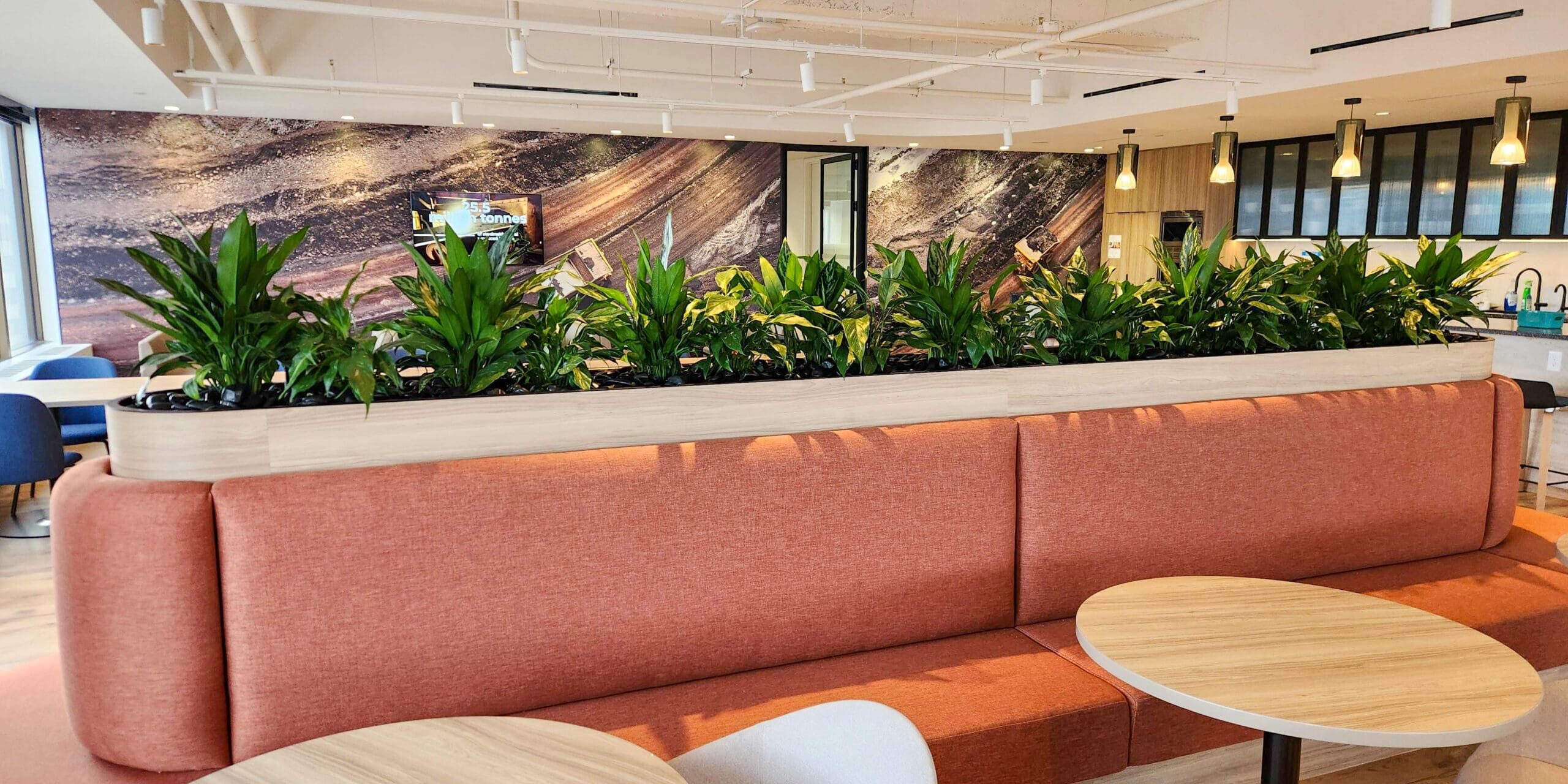
Have you ever felt calmer or more focused in a space filled with greenery, natural textures, or even sunlight? That’s not just a feeling: science proves that nature in interior design can improve our mood, reduce stress and enhance productivity.
Designers call this approach Biophilic Design, and it’s increasingly popular in offices, homes and commercial spaces.
Why do humans need nature indoors?
The concept of biophilic design comes from the Biophilia Hypothesis (1984), popularized by a biologist: Edward O. Wilson. Humans have an innate connection to nature, shaped over thousands of years of evolution. When natural elements are present indoors, our brains respond positively, making spaces feel more comfortable, relaxing and engaging.
How nature reduces stress
Research shows that plants, moss walls, and natural materials lower stress and improve mood. Stress Reduction Theory, developed by Roger S. Ulich (1983), explains that exposure to natural elements triggers a calming response, reducing heart rate, blood pressure, and cortisol levels.
How to bring nature into interior design
In modern spaces, where people spend most of their time indoors, reconnecting with nature is essential. Designers and businesses can integrate nature in interior design by adding:
- Living walls
- Preserved moss walls and foliage
- Indoor plants
- Natural materials like wood, stone, and organic textures
- Natural light
These elements not only create visually appealing interiors, but also support physical and mental well-being.
Transform your space with biophilic design
The science is clear: nature in interior design improves health, mood, and performance. At ByNature, we specialize in innovative greenery solutions, from custom moss walls to living walls and artificial plants, helping transform indoor spaces into healthier, more inspiring environments.