

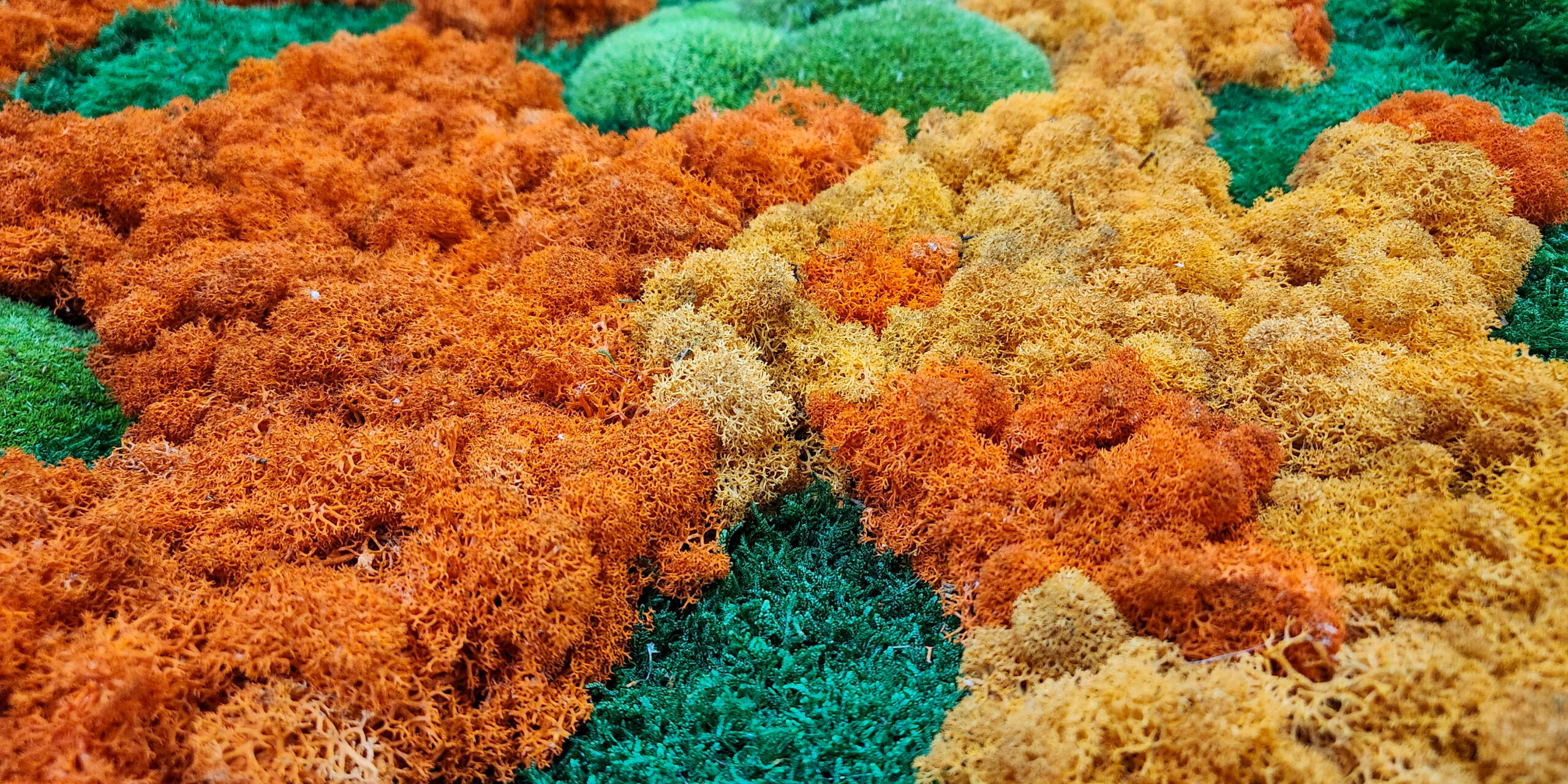
Preserved moss is becoming very popular in interior design, especially in biophilic installations like moss walls and green décor. But many people wonder: how is preserved moss actually made?
Unlike living plants, preserved moss no longer grows, but it still keeps its natural appearance, softness, and vibrant colour for years. The process that makes this possible is both natural and carefully controlled.
What is preserved moss?
This is why it’s ideal for interior design applications such as moss walls, logos, or even planters!
The preservation process
- Harvesting the moss
Our moss is first harvested from mainly European farms. Responsible harvesting practices are important to ensure that ecosystems remain healthy and sustainable. - Natural Preservation
Once harvested, the moss goes through a preservation process where the plant’s natural sap is replaced with a biodegradable glycerin-based solution. This step stops the plant’s biological activity while maintaining its flexibility and natural structure. - Coloring and Finishing
After preservation, the moss may be enhanced with food dye pigments to achieve consistent, vibrant colours.
Why is preserved moss ideal for interior spaces?
- no watering or very low maintenance required
- no need for sunlight
- long-lasting natural appearance
Because it is real plant material, preserved moss still brings the texture and visual connection to nature that designers seek in Biophilic Design.
Bringing preserved moss into your space
At ByNature, preserved moss plays a key role in creating unique greenery solutions that help transform indoor environments into inspiring, nature-connected spaces.